 Gerard ’t
Hooft
Gerard ’t
Hooft
Professor Theoretical Physics
home page 
Buys Ballot Building (BBG) Utrecht
Postal address:
Faculty of Science,
Department of Physics
Institute for Theoretical Physics
Princetonplein 5, 3584 CC Utrecht
The Netherlands
Tel.: +31 30 253 5928
+31 30 253 1863
e-mail: g.thooft@uu.nl
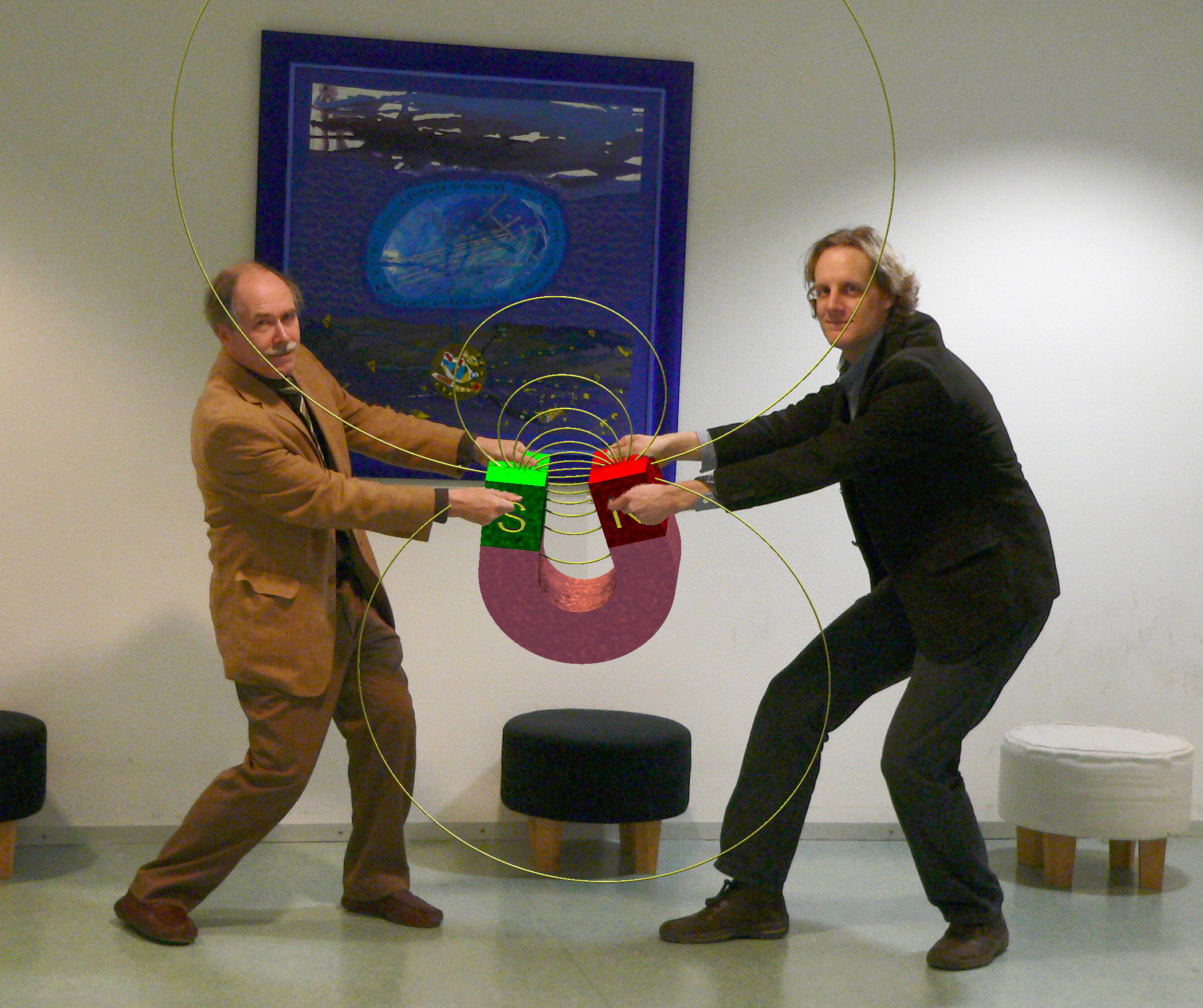
Discussing Magnetic Monopoles with Rembert Duine
Warning 1: due to severe clogging of this email post box, I can no longer guarantee that received messages will be processed and/or answered.
Warning 2: Since notions of privacy have been completely abandoned by Facebook, I do not accept friends there. Requests to be “connected” in other social networks such as LinkedIn are only occasionally considered if they are written with some personal note, certainly not when they seem to come from robots.
 Click here for lectures (notes, PowerPoint files)
 G. ’t Hooft
Curriculum Vitae
G. ’t Hooft
Curriculum Vitae G. ’t Hooft List of PhD Students
G. ’t Hooft publication list
NEW:
Marcel Grosmann 16 Award, for his persistent devotion to the study of the quantum field theory boundary conditions at the black hole horizon”.
Progress in my personal research (1) On the origin of quantum mechanics as a doctrine for describing atoms, molecules, sub-atomic particles and more. Aim: write models that reproduce quantum behavior such that they can run on a classical computer. Question: how can one mimic quantum interference effects in a classical computer? Thought to be impossible, but the mechanism described in my latest paper works! For me, quantum mechanics is no mystery anymore. All one has to understand is:The Emergence of Quantum Mechanics from Fast Vacuum Fluctuations, arXiv:2010.02019 (quant-ph).
(2) On finding the precise evolution laws of black holes as derived from Standard Model equations, combined with what we know about Gravitation and General Relativity. String or superstring theories should not play a role as long as we do not reach the domain of length scales relevant to strings. There are things running astray long before strings begin to be relevant. For instance, people, including string theorists, noted that black holes lose information in a mysterious way. If handled along the lines of the text books. But we don't know what the correct text book lines are. I don't see why black holes should lose information at all, but i do see good reasons for not believing the text books here. In June 2022 I discovered that the quantum states in the interior region of a black hole, called `region II' in our jargon, are merely quantum clones if the exterior states (region I). See
Quantum clones inside black holes, ArXiv number 2206.04608.
A response to C. le Pair: "EEN MOOIE TOEKOMST NA EEN 'DIPJE'"
Deterministic Quantum Mechanics: the Mathematical Equations,, Subm. to the Article Collection: "Towards a Local Realist View of the Quantum Phenomenon", Frontiers Research Topic, ed. A.~Casado et al.
My latest paper on the quantum black hole, in lecture note format (Version 2)
The Niels Bohr Institute Medal of Honour, Copenhagen, 30 November 2016.
Appointed as Adjunct Professor in Physics, at Faculty of Mathematics and Natural Sciences, Bandung, Indonesia,
from November 2, 2016 to December 31, 2020.
Laureated by Carlo and Karin Giersch through the Stiftung Giersch as:
FIAS (Frankfurt Institute for Advanced Studies) Senior Fellow Laureatus, Frankfurt, September 28, 2016.
Several of my pages have been "translated" into languages I do not speak myself. I doscovered that
these often turn out to be unreadable robotic translations; they just wanted me to give them a link from here, to make themselves
pop up high in Google. I erased all such links now. If anyone has a genuie translation and wants me to add a link, please
provide support from a respectable physicist.
When I was a student, I was often inspired by marvellous scientific
discoveries, and then I asked the question whether I were in any
position to reproduce such discoveries. As a kid, I tried to measure
the speed of light, and Newton's constant of gravity. Both attempts
were hopeless failures. But the phenomenon of phase contrast, yes,
that I could reproduce that in my own microscope.
Here is the explanation.
( Ik werk thans aan de
Universiteit Utrecht )
-
Stellingen
In vroeger tijden was het verplicht minimaal 10 "stellingen" toe te
voegen in een dissertatie. De stellingen moesten wetenschappelijke
onderwerpen betreffen maar niet direct op het proefschrift betrekking
hebben. Hiermee kon de promovendus aantonen dat zijn wetenschappelijke
belangstelling verder reikt dan alleen het onderwerp van het proefschrift
(daar is nu natuurlijk geen tijd meer voor),
maar stelden opponenten die niet de gelegenheid hadden gehad het uiterst technische geweld van het
proefschrift in zich op te nemen, ook in staat om interessante
vragen te stellen.
De Nobelprijs chemie van 2014 ging naar E. Betzig, S.W. Hell en W.E.
Moerner voor de ontwikkeling van super-resolutie fluorescentie microscopie.
We lezen in de officiële toelichting van de Kungl. Vetenskapsakademien
dat de gebruikelijke formule voor het oplossend vermogen van een
microscoop luidt: Δ = λ / 2n sin α ; in 1992
werd door Bobroff, en in 2002 door Webb, benadrukt dat die formule kan worden
verbeterd: Δmin = λ / (2n sin α√N
),
waar N het aantal gebruikte fotonen is. In de jaren 2002 - 2006 werd
de hoge resolutie fluorescentiemicroscopie ontwikkeld waar deze formule op
van toepassing is.
Stelling 8 van mijn proefschrift (1972) luidde:
"
De onzekerheidsrelatie Δx ≈ λ in de optika is niet algemeen geldig indien de
waarneming met veel meer dan een foton wordt gedaan. Zij moet dan worden vervangen door
Δx ≈ λ / √N
,
waarin
N het aantal fotonen is dat nodig is voor de waarneming. In de microscopie kan men in
principe hiervan gebruik maken."
(De factor 2n sin α is in deze discussie minder belangrijk)
Het spreekt vanzelf dat ik geen idee had hoe deze vaststelling in de praktijk zou kunnen worden
toegepast; dit is wat de Nobel laureaten van 2014 hebben ontdekt.
- Birth Grandson Benjamin Leendert van Deutekom, 3855g, 51 cm. October 7 2015.
- Artificial Anthropomorphic Intelligence, an
Essay
- Nederland in Ideeën
- Lucas Ellerbroek, "Planetenjagers" (Prometheus / Bert Bakker) is aan te
raden.
- Opvattingen over:
godsdienstextremisme als besmettelijke ziekte.
- Een
skeptische verhandeling over sommige amateurs in de natuurwetenschappen (in Dutch)
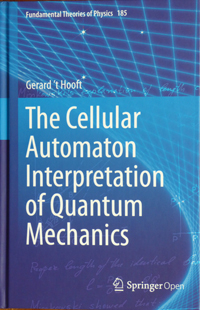
- Long review paper on the "Cellular Automaton Interpretation of
Quantum Mechanics, A View on the Quantum Nature of our Universe, Compulsory or
Impossible?", where all arguments concerning entanglement, superdeterminism
and conspiracy are displayed at length, besides numerous models. See
http://arxiv.org/abs/1405.1548.
Page " How to become a GOOD theoretical physicist
" has been replaced. The website is back in a good shape and is being maintained by Navaneeth Gaddam.Family:
G. ’t Hooft is married to: A. A.Schik, MD, formerly anesthesiologist, Arbo-arts (medical doctor for company personnel). Now retired. Two daughters:Saskia A. Eisberg - ’t Hooft. Labyrinth Risk Consulting, Now living in Zeist (NL), and
Ellen M. ’t Hooft. Veterinary Surgeon at Hopmans Diergeneeskundig Centrum, Roden, Drenthe (NL)
Some pictures of ’t Hooft family
Grandson Daniel is practicing etiquette for his next Nobel Banquet

Books:
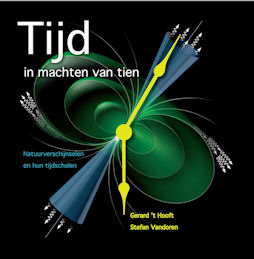
Tijd in machten van Tien , door Gerard ’t Hooft en Stefan Vandoren, Uitgave Natuurwetenschap & Techniek, onderdeel van Uitgeverij Veen Magazines B.V.
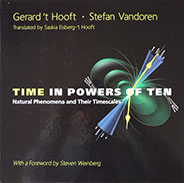
Time in Powers of Ten , by G. ’t Hooft and Stefan Vandoren, translated by Saskia ’t Hooft - Eisberg. World Scientific.
The idea is simple: Physicists and astrophysicists have produced various popularized descriptions of the enormously varying length scales in the Universe, in books and films. The Universe is some 50 billion light years across, that's nearly 1029 cm. The smallest conceivable objects are superstrings, somewhere around 10-32 cm. At every scale in powers of ten, our world looks different and very special. So now, we do the same thing with time. In fact, the variations in the time scales are even bigger. The time scale for super strings is 10-43 seconds, and age of the Universe is less than 1018 seconds, but there are phenomena that outlast our Universe by gigantic factors. The lifetime of the most fundamental particle in our world, the proton, is expected to be something around 1041 seconds, and large black holes can last much longer than that. At nearly every time scale, things happen in our world, and we describe them, starting with just one second, then 10 seconds, 100 seconds and so on, until in the middle of the book, where we switch to the fastest time scales conceivable, until at the end we return to one second.
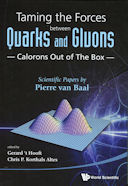
Taming the forces between Quarks and gluons - Calorons Out of The Box, Scientific Papers by Pierre van Baal, eds G. 't Hooft and C.P. Korthals Altes, Wold Scientific. Book presented at the Lorentz Institute, Leiden June 21, 2013.
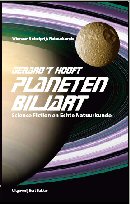
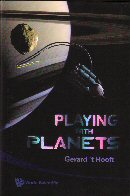
The English translation of "Planetenbiljart" has appeared. English title: "Playing with Planets" (World Scientific, Singapore). The original text has been improved in many ways. Translation by my daughter Saskia.

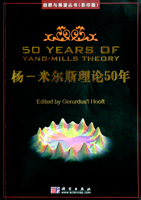
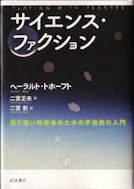

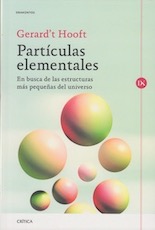
An account of our investigations in elementary particle physics, translated in various languages:

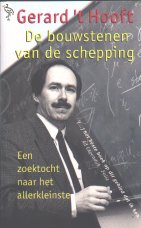
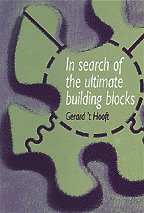

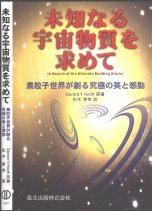

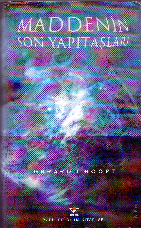
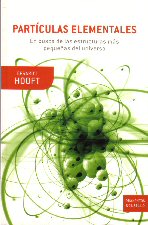
May, 2013: A few more tesselations
See Computer art . Please first check your screen.
Some animations used in PowerPoint presentations (Note: these files tend to be a bit large, be patient with downloading)
Unpublished work:
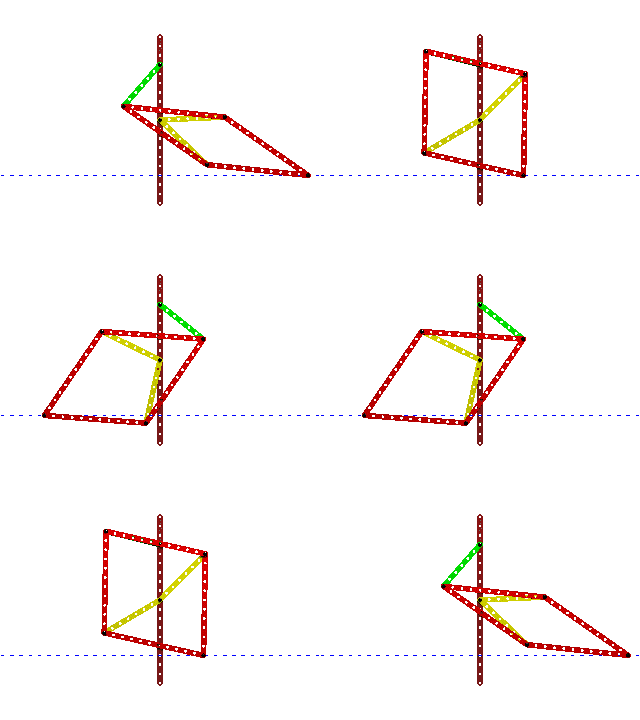 Figure at left: the "Peaucellier–Lipkin linkage". See
"
Meccano Mathematics I", a little treatise on some nice features of meccano strips.
For those who like Meccano and Euclidean geometry at shigh school level.
Meccano Math II describes the solutions to the exercises given in Meccano
Math I, and more. Interesting new solutiosn (from the 19th century!) are described in
Meccano Math III
Figure at left: the "Peaucellier–Lipkin linkage". See
"
Meccano Mathematics I", a little treatise on some nice features of meccano strips.
For those who like Meccano and Euclidean geometry at shigh school level.
Meccano Math II describes the solutions to the exercises given in Meccano
Math I, and more. Interesting new solutiosn (from the 19th century!) are described in
Meccano Math III
On the Phase Contrast Microscope.
Gravitating misconceptions: response on claims by a group of self proclaimed scientists concerning the validity of the theory of General Relativity.
Taalperikelen (door G. ’t Hooft)
Voordracht over Professor Sickbock t.g.v. de Marten Toonder tentoonstelling in het Teylers Museum te Haarlem,1 juni 1996.
Some old documents were found when cleaning some closets:
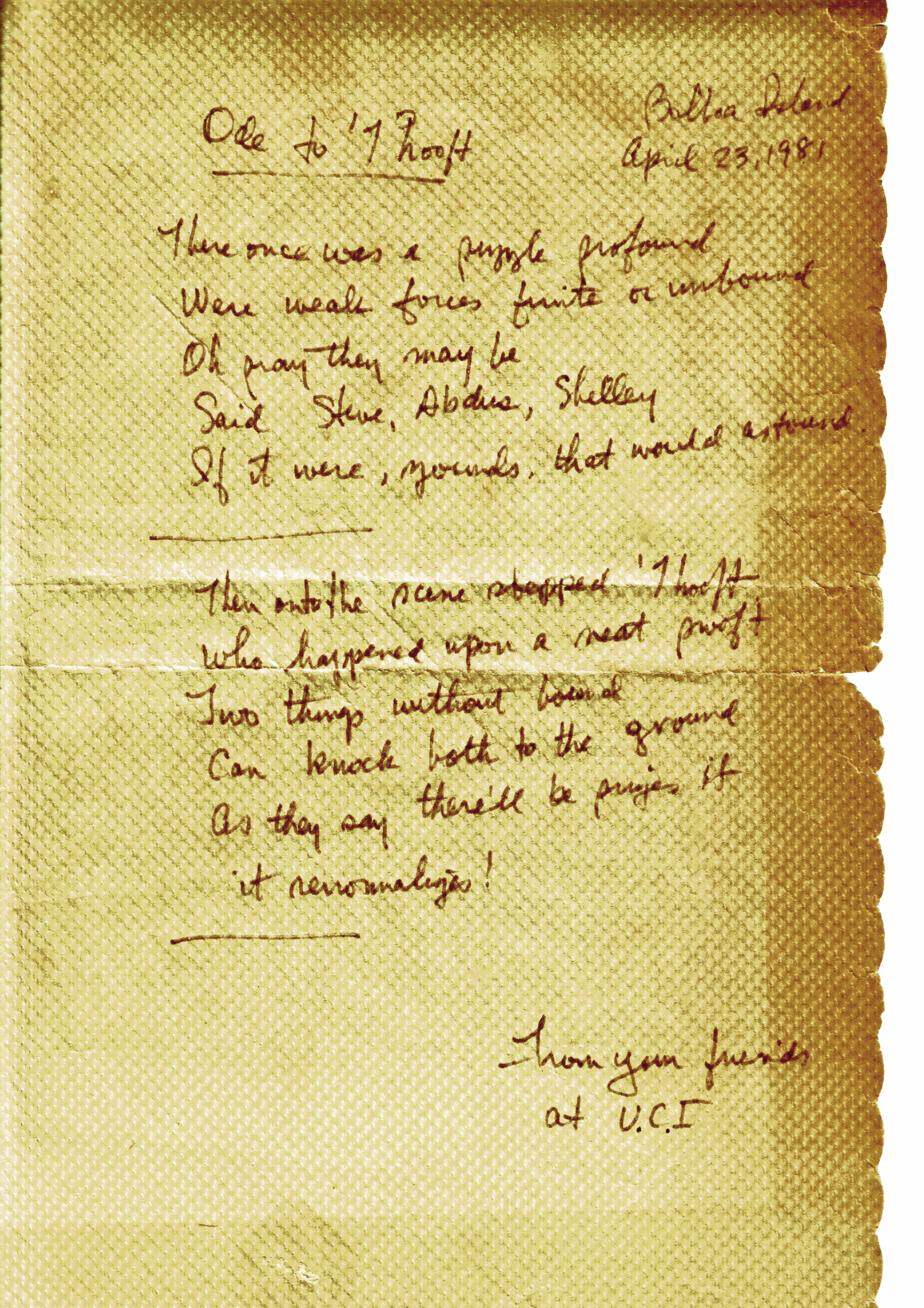
1) Here is what Frederick Reines wrote on a napkin in a restaurant on Balboa Island, Newport Beach, California, back in 1981. And:
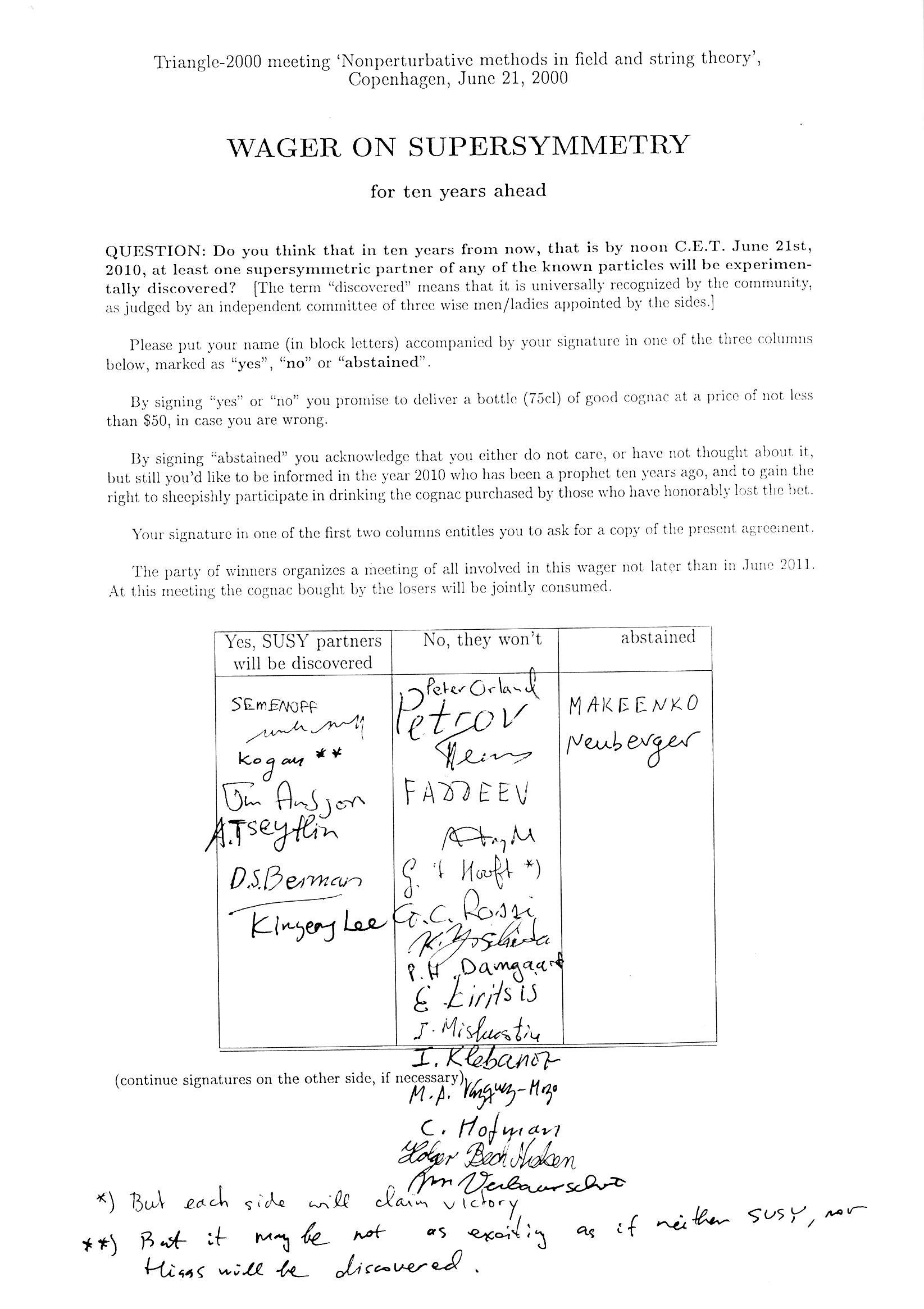
2) In the year 2000, at Copenhagen, many physicists were bold and optimistic about supersymmetry. Here is a wager, duly recorded. The date of "discovery of supersymmetry" was set at June 21, 2010. I would be ready to give them another six or so years, but then I will politely approach my susy friends to inquire about the bottle of cognac.
3) Brief aan Darwin (in Dutch, op uitnodiging van De Volkskrant
4) Reaction upon a letter that was sent to The New Scientist by a group of scientists who urge to establish new categories of Nobel Prizes. Later, I learned that the Nobel Committee itself reacted very much in the same spirit.
Columns in FYLAKRA:
Uit ’t Hooft

’t Hooftthema
Hooftrekenen
Hooftzakelijk
’t Hooftkussen
A treatise on evolution.
More papers that were never published can be obtained here.
Fulmination
The inconveniences of life, such as modern software, see my Fulmination Pages (mopperpagina's): food, software, powerpoint, printers.Read this fairy tale. Your reactions are welcome
Complaints about MS Word®: http://www.gnu.org/philosophy/sylvester-response.html .
Add to this the serious troubles with its so-called "smart quote" feature, which inverts quotation marks incorrectly. In particular, it deliberately wrecks the spelling of the family name ’t Hooft, where it replaces the apostrophe by a ‘beginning quotation’ mark.
And here is the universal manual for everything
Past events:
June 5, 2012: Honorary Doctorate from the National Polytechnical University of Odessa, Ukraine.
General interests:
Boek van Lucas Ellerbroek, "Planetenjagers" (Prometheus . Bert Bakker) is
aan te raden.
Exploration of the Moon and Mars. See book: "Playing with Planets".
link1; link2; a hotel on the Moon, Lunex, Go Back to the Moon
A human settlement on Mars is also conceivable, but it will be a very long term project. My present view point on this is that a permanent human settlement on the Moon will be a very logical first step, as I described in "Playing with Planets". Experience with that will be indispensable for preparing a safe and lasting human presence on Mars. It all depends on how much support such plans will receive world-wide! The demands on funding will be enormous.
Asteroid 9491 Thooft has its orbit between those of Mars and Jupiter. This asteroid was discovered March 25, 1971, by C.J. van Houten and I. van Houten-Groeneveld on Palomar Schmidt plates taken by T. Gehrels.
They are also the discoverers, in 1977, of asteroid 11779 Zernike , named after my grand-uncle Frits Zernike.
As illustrated by this photo, all cattle in the meadows of the Netherlands by law have to wear ear tags. My bicycle trip in the countryside inspired me to modify the bylaws of Constitution Law # 13 for 9491 Thooft-s Constitution.
An article concerning freedom of religion was added.
LINKS:
For alternative views concerning the question "what is science, and what isn’t?",
see this
link Nobel Prize
The 1999 Nobel Prize in Physics has
been awarded by the
Royal Swedish Academy of Sciences jointly to
Gerardus ’t Hooft and Martinus J.G. Veltman. The Academy’s citation: "for elucidating the quantum structure of electroweak
interactions in physics."
FAQ
See also
Robert J. Lang’s Origami science.
More papers that were never published can be obtained
here.
Het Platform Bèta Techniek,
met alle Bèta
ambassadeurs.
Meer weten over natuurkunde? Zie de site Kennislink.
A web site for all ambitious starting theoretical physicists, featuring a complete list
of all mandatory topics in mathematics and elementary as well as advanced
theoretical physics. See:
How to become a GOOD theoretical physicist. Don’ t wait until
you enter the University. Start now.
Comments are welcome.
See also:
How to become a BAD theoretical physicist.
Support the heroic
Rationalist International, an activity based in India.
Check the logic of your opponent’s arguments
here!
My autobiography
was published by the Nobel Foundation.
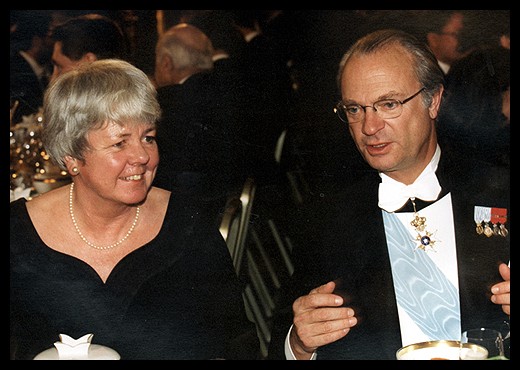
Gerard ’t Hooft receiving his Nobel Prize from His Majesty the
King
King Carl XVI
Gustaf and Mrs ’t Hooft
The Nobel Prize Diploma
The Medal
 A frequently asked question:
Can Theoretical Physics explain
paranormal phenomena? You do not want to hear about it. So
do NOT click on
A sober
explanation (in English) , or Poster op
het Skepsis-congres (in het Nederlands) , 8 mei
1998.
Special message to those who wish to mail
to me their new revolutionary theories: Please first check your Baez
index , and/or consult Warren Siegel .
Another "experiment" was recently
reported in which paranormal signals were claimed to be observed. Probably the
flaw is an incorrect handling of the statistics, where unintentional bias was
difficult to exclude. I am prepared to challenge these and any other serious
investigators with a bet. See here
the conditions.
Last revised: ≥ September, 2022